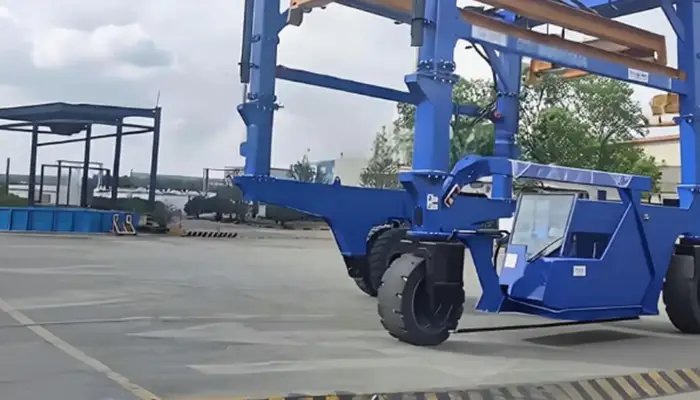
Sloped Industrial Yards? Safe and Efficient Container Handling Solutions
menu_open
Content Quick Link
Check why slopes in industrial yards matter and how slope-ready straddle carriers with anti-slip wheels, powerful engines, and precision steering can improve safety, efficiency, and productivity for steel mills, port terminals, and logistics centers.
Most Important Takeaway
If your industrial yard has slopes or uneven surfaces, selecting the right straddle carrier is crucial. With enhanced engines, anti-slip tires, and precision steering, you can move fully loaded containers on inclines safely and efficiently, avoiding operational delays and minimizing risk.
- Slopes are common in steel mills, port container terminals, logistics centers, and construction or precast concrete yards.
- Moving fully loaded containers uphill requires additional traction, power, and precision steering.
- Early planning of container paths, loading zones, and operator training minimizes accidents and downtime.
- Investing in slope-ready straddle carriers boosts workflow efficiency, operational safety, and yard productivity.
- Identifying sloped areas early helps determine the correct container handling equipment and yard layout.
Frequently Asked Questions
This section addresses practical questions related to straddle carrier operation in real yard conditions, especially where slopes, uneven ground, and operational safety become critical factors in daily container handling.
Does my yard need a slope-ready straddle carrier?
A: If your yard has inclines or uneven surfaces, a slope-ready straddle carrier is highly recommended.
- Even small slopes can create safety hazards and slow down container handling.
- Using a carrier designed for inclines ensures consistent traction, stability, and smoother operations.
How do slopes impact container handling efficiency and safety?
A: Slopes increase the risk of container slips, tipping, and operator errors, which directly affect efficiency.
- Inclined ramps require more engine power and precise steering to maintain load stability.
- Without proper planning, slopes can cause delays, extra trips, and equipment strain.
What straddle carrier features are essential for sloped industrial yards?
A: High-power engines, anti-slip wear-resistant wheels, and 4-wheel precision steering are critical.
- These features maintain traction and control on inclines, even when moving fully loaded containers.
- Optional technologies like load sensors or slope monitoring further improve safety and reduce accidents.
How can operators safely move containers on inclines?
A: Operators should follow mapped paths, keep loads balanced, and control speed carefully.
- Proper training in slope-specific techniques ensures smoother turns and prevents slips.
- Planning dedicated lanes for uphill and downhill movement reduces cross-traffic and collisions.
How can I reduce downtime and increase overall yard productivity?
A: Combine slope-ready equipment, path planning, and operator training to streamline operations.
- Optimized container routes and dedicated lanes save time and prevent accidents.
- Maintaining proper load distribution and using traction-enhanced carriers reduces equipment wear and improves daily output.
Slopes in Industrial Yards – Why They Happen and What You Should Know
Industrial yard slopes, container handling safety, yard inclines, straddle carrier performance—these are things every yard manager runs into sooner or later. Let's face it: very few industrial yards are perfectly flat. And if you're moving fully loaded containers around a steel mill, port terminal, or logistics hub, those inclines matter—a lot.
So why do these slopes exist? Here's the reality:
- Natural terrain or topography: Most yards follow the lay of the land. If your yard is on slightly hilly ground or built on an expansion site, expect gentle inclines. It's nothing unusual, but it does affect how containers move.
- Drainage near loading bays or storage areas: Water pooling is a big no-no. Slight slopes are often deliberate, letting rainwater or wash water flow away. That way, your surfaces stay safer, and containers don't get damaged.
- Temporary layouts in construction or expansion zones: Sometimes, the yard isn't fully leveled yet. You'll see uneven areas in temporary storage zones or construction yards. The containers still need to move, so you can't ignore these inclines.
Practical Takeaways:
- Sloped areas are high-risk zones. Even a small incline can cause a container to slip or tip if the operator isn't alert.
- Map your slopes early. Seriously, knowing where every incline is helps you pick the right straddle carrier and plan container paths efficiently.
- Add safety measures: anti-slip wheels, traction control, or operator training for slope handling. You'll save time, prevent accidents, and avoid unnecessary damage.
- Don't underestimate small slopes. They affect braking, traction, and steering, and noticing them in real operations makes a big difference in workflow and safety.
Types of Industrial Yards Likely to Have Slopes
Sloped industrial yards, container handling on inclines, straddle carrier performance, and yard safety are real operational challenges across many facilities. Understanding where slopes commonly appear helps in selecting the right equipment and planning safer, more efficient container movement.
Steel and Metal Processing Yards
If you've worked in a steel mill or metal processing yard, you know that heavy materials like slabs, coils, and metal sheets are already difficult to handle on flat ground. When slopes are involved, the risk of tipping or slipping increases significantly.
- Slope-ready straddle carriers with extra traction are essential.
- Fully loaded carriers need steady uphill performance to prevent container sliding on ramps.
- Operators must carefully plan load paths to avoid sudden stops or unsafe turns.
In steel and metal yards, slopes are not just inconvenient—they can directly slow down workflow and increase the risk of cargo damage if not properly managed.
Port Container Terminals
At port terminals, inclined ramps and drainage slopes are commonly built for water runoff and vehicle access, but they add complexity to container handling operations.
- Precision steering on straddle carriers is essential to avoid collisions.
- Smooth turns and controlled speed help reduce container sway during movement.
- Careful planning of loading and unloading paths around ramps improves both safety and efficiency.
Even small inclines in ports can affect timing and safety, making slope-capable carriers an important requirement.
Logistics and Distribution Centers
In logistics and distribution centers, yard layouts are often constrained by urban space, expansion limits, or uneven land conditions. As a result, slopes can appear in unexpected areas.
- Anti-slip wheels and traction control are important for safe uphill movement of pallets and containers.
- Efficient path planning helps reduce cross-traffic and unnecessary stops.
- Operators trained for slope conditions help maintain on-time delivery performance.
Paying attention to these details can significantly reduce wasted time in daily logistics operations.
Construction and Precast Concrete Sites
Temporary storage zones in construction and precast concrete sites are rarely perfectly level. Slopes are often part of the working environment rather than an exception.
- Slope-ready straddle carriers help maintain load stability and reduce accident risk.
- Proper placement of precast elements improves equipment safety and protects valuable materials.
- Even minor inclines can lead to downtime if equipment is not designed for slope conditions.
In construction environments, slope management is directly linked to both safety and operational efficiency.
Challenges Yard Owners Face on Slopes
Industrial yard safety, container slipping risks, straddle carrier efficiency, operator performance on inclines—these are real challenges that crop up whenever your yard isn't perfectly level. Slopes may seem minor at first, but they can quickly turn into costly problems if not managed properly.
Moving containers on inclines isn't just about driving uphill. Even small slopes can create unexpected hazards:
- Slipping containers or straddle carriers can damage goods or the equipment itself. One wrong turn on a ramp and a fully loaded container can slide or tip—trust me, it happens more often than you'd think.
- Repositioning vehicles or containers because they didn't sit properly wastes time, labor, and energy. It's frustrating for operators and slows down the whole yard operation.
- Operator errors increase when handling inclines. Even experienced drivers need extra focus to maintain control on slopes, especially when containers are heavy or stacked.
Practical Considerations:
- Multiple trips due to poor planning can drastically reduce operational efficiency. If paths aren't optimized, operators may have to double back or make unnecessary stops.
- Brakes and engines get extra wear and tear on slopes. Moving heavy containers uphill repeatedly puts more stress on your equipment, increasing maintenance costs.
- Delays caused by slope-related mishaps impact overall yard productivity and workflow, slowing down container turnover and affecting schedules across the facility.
In short, slopes in industrial yards aren't just minor inconveniences—they directly affect safety, efficiency, and the bottom line. Recognizing these challenges is the first step toward safer, smoother operations.
How Slope-Ready Straddle Carriers Solve These Problems
Slope-ready straddle carriers, container handling on inclines, industrial yard efficiency, anti-slip wheels, precision steering—these are the tools that make a real difference when your yard isn't perfectly level. Let's break down how the right equipment can turn slope-related headaches into smooth operations.
Key Features
- High-power engines: These straddle carriers are built to handle fully loaded containers uphill without stopping. No more struggling halfway up a ramp or risking a load slide. You just drive, and the machine does the work.
- Anti-slip, wear-resistant wheels: Maintaining traction on inclines is critical. These wheels grip the surface firmly, keeping containers stable even on damp or slightly uneven concrete.
- 4-wheel precision steering: Tight turns on ramps or around obstacles? Not a problem. Precision steering lets operators maneuver safely, reducing collisions and saving time on every move.
Practical Benefits for Yard Owners
- Move containers faster, safer, and with less effort: Operators spend less time compensating for slopes, and containers stay secure. Work gets done efficiently without added stress.
- Reduce equipment wear and maintenance costs: Engines and brakes don't get overworked. That means lower maintenance bills and longer life for your straddle carriers.
- Streamline yard workflow and boost productivity: With slope-ready carriers, you can plan smoother paths, minimize delays, and keep containers moving steadily throughout the day.
In short, slope-ready straddle carriers aren't just a nice-to-have—they're essential if you want your yard to operate safely, efficiently, and with minimal downtime, even on challenging inclines.
Operational Strategies Yard Owners Can Use Immediately
Slope management in industrial yards, container path planning, straddle carrier efficiency, operator training on inclines, and load stability are not just theoretical concepts—they are practical strategies that directly impact daily productivity. With proper planning, even slope-heavy yards can operate safely, efficiently, and without constant delays.
Map Uphill and Downhill Container Movement Paths
Before starting daily operations, yard areas should be carefully reviewed to identify inclines, ramps, and potential risk zones. Mapping these areas helps define safer and more efficient movement routes for both loaded and empty carriers.
For example, a fully loaded 40ft container moving uphill behaves very differently from an empty unit moving downhill. Planning routes in advance reduces sudden stops, unnecessary braking, and equipment strain.
Dedicate Specific Lanes for Traffic Control
Separating lanes for uphill and downhill movement—or for loaded versus empty containers—significantly improves safety and workflow clarity.
Even in smaller yards, clearly marked paths reduce confusion and prevent unnecessary vehicle interaction, resulting in smoother and more predictable operations.
Balance Container Weight Placement for Stability
On sloped surfaces, load distribution becomes critical for safe operation. Proper weight balance helps maintain stability during movement and reduces the risk of tipping or wheel slippage.
- Heavier containers should be positioned closer to the center of gravity.
- Uneven or off-center loads should be avoided whenever possible.
- Correct balance reduces stress on both equipment and operators during ramp movement.
Train Operators in Slope-Specific Handling Techniques
Operator experience alone is not enough when working on inclines. Structured training ensures safe control of speed, braking, and steering under slope conditions.
- Gradual braking techniques help maintain load stability.
- Steering adjustments must account for load shift on inclines.
- Regular hands-on training reduces accidents and improves operational confidence.
Practical Example: Improving a 10% Incline Steel Yard
In a steel yard with a 10% slope, operations initially faced frequent container slips and repeated repositioning issues.
After improvements:
- Adoption of slope-ready straddle carriers with anti-slip wheels and precision steering.
- Clear mapping of uphill and downhill movement routes.
- Operator training focused on slope handling techniques.
- Standardized load distribution procedures for all container types.
Results within one month:
- 30% faster loading and unloading cycles
- Zero slips or tipping incidents
- Reduced operator interventions per day, freeing up manpower for other tasks
This demonstrates that combining proper equipment with structured operational planning can transform a slope-heavy yard into a stable, efficient, and predictable working environment.
Conclusion
Sloped industrial yards don't have to slow operations. By identifying inclined areas, investing in slope-ready straddle carriers with anti-slip wheels and precision steering, and training operators for slope handling, yard owners can safely and efficiently move fully loaded containers. This approach reduces downtime, protects cargo, and maximizes yard productivity.

Article by Bella ,who has been in the hoist and crane field since 2016. Bella provides overhead crane & gantry crane consultation services for clients who need a customized overhead travelling crane solution.Contact her to get free consultation.